Moon's Secret | Earth Collision?
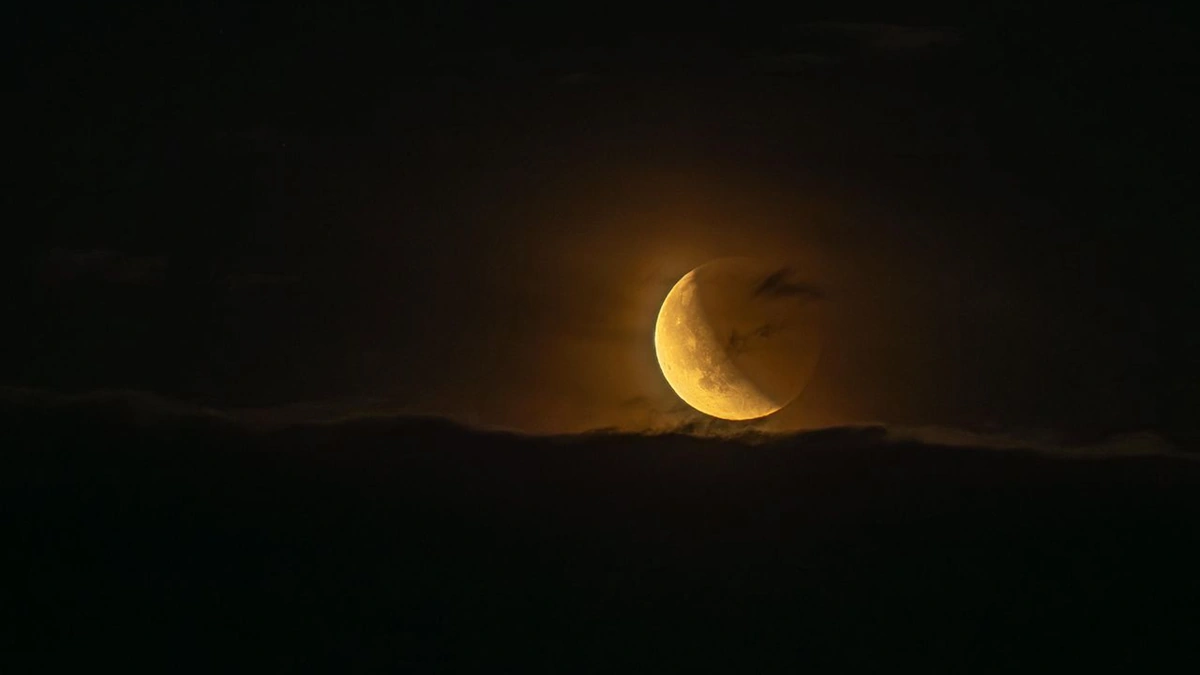
Here’s the thing: we look up at the Moon every night, right? It’s always there, a constant in our ever-changing lives. But have you ever stopped to wonder how it actually got there? I mean, really got there? It’s not like it just popped into existence. The leading theory the one you probably learned in school involves a cataclysmic collision. But what does that really mean? Let’s dive deep, and I mean deep, into the cosmic billiards game that might have given us our lunar companion.
The Giant Impact Hypothesis | More Than Just a Bump in the Night
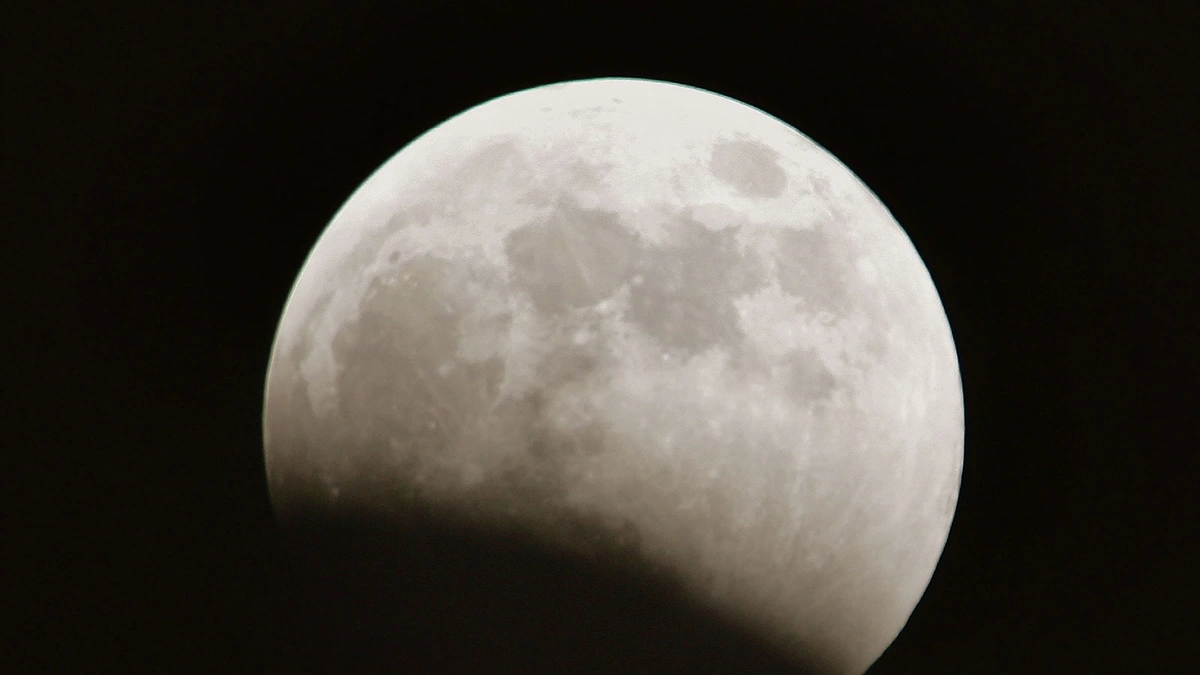
The Giant Impact Hypothesis, in a nutshell, suggests that early in Earth’s history we’re talking billions of years ago a Mars-sized object, often referred to as Theia, smashed into our planet. Now, this wasn’t a gentle tap. This was a head-on collision with enough force to vaporize a significant chunk of both Earth and Theia. The debris from this impact, a swirling cloud of molten rock and dust, eventually coalesced under its own gravity to form the Moon . Sounds dramatic, right? It is.
But here’s why this matters. Understanding the Moon’s origin isn’t just about satisfying our curiosity about space. It tells us a lot about the formation of Earth itself. It helps us understand the conditions that allowed life to arise on our planet. Think of it this way: the Moon is a time capsule, a frozen record of the solar system’s early days. And studying it unlocks secrets about our own past.
The Evidence | Lunar Rocks and Isotopic Similarities
So, it’s a good story, but where is the proof? One of the strongest pieces of evidence supporting the Giant Impact Hypothesis comes from the Apollo missions. When astronauts brought back lunar rocks, scientists were able to analyze their composition. What they found was fascinating: lunar rocks share a remarkably similar isotopic composition to Earth’s mantle. Isotopes are versions of elements with different numbers of neutrons. And the specific ratios of isotopes in lunar rocks are almost identical to those found deep within Earth. That can’t be a coincidence.
What fascinates me is the implications of this. If the Moon had formed from a completely different part of the solar system, its isotopic signature would be different. But the fact that it’s so similar to Earth’s mantle strongly suggests that the Moon is, in fact, made from material that originated from our own planet. This is not to say that other ideas are false. But the data collected by the Apollo mission supports the Giant Impact Hypothesis. The question of the Moon’s creation is still up for debate. For more information on lunar exploration, visit NASA’sApollo Missions page.
Challenging the Hypothesis | New Research and Alternative Theories
Of course, science is never settled. There are always new discoveries and alternative theories to consider. While the Giant Impact Hypothesis is the most widely accepted explanation for the Moon’s origin , it’s not without its challenges. Some recent research suggests that the isotopic similarities between Earth and the Moon might be even more similar than previously thought, which raises questions about the exact nature of the impact. Did Theia just graze Earth? Was the impactor smaller than previously believed? These are the kinds of questions scientists are grappling with today.
One alternative theory, for example, proposes that the Moon formed from a series of smaller impacts, rather than a single giant collision. Another suggests that Earth was spinning much faster in its early days, which could have made it easier for material to be ejected into orbit. Let me rephrase that for clarity: if Earth was spinning faster, less energy would have been needed to fling debris into space. This debris could then coalesce into the Moon . The truth is, the Moon’s creation is very complex. A common mistake I see people make is thinking we know all the answers. We don’t. But we’re getting closer all the time.
But, understanding the Moon’s creation can help determine the next steps to take to ensure a bright future for mankind. Take a look at the concept ofnebula.
Implications for Life on Earth | A Stabilizing Influence
So, let’s say the Giant Impact Hypothesis is correct. What does that actually mean for us? Well, the existence of the Moon has had a profound impact on the development of life on Earth. The Moon’s gravity stabilizes Earth’s axial tilt, which is the angle at which our planet is tilted relative to its orbit around the Sun. This stabilization is crucial for maintaining a relatively stable climate over long periods of time. Without the Moon , Earth’s axial tilt would wobble wildly, leading to dramatic and unpredictable climate swings. This would make it much more difficult for complex life to evolve and thrive.
And think about the tides. The Moon’s gravitational pull is the primary driver of our planet’s tides. These tides play a vital role in ocean circulation, nutrient distribution, and the evolution of marine ecosystems. It’s quite interesting when you consider the moon phases , such as theSupermoon.
The Moon’s formation is deeply connected to the conditions that allowed life to exist on Earth.
FAQ About the Moon’s Origins
Frequently Asked Questions
What is the Giant Impact Hypothesis?
It’s the leading scientific explanation for how the Moon formed. It suggests that a Mars-sized object collided with Earth early in its history, and the debris from this collision coalesced to form the Moon .
What evidence supports the Giant Impact Hypothesis?
The main evidence comes from the isotopic composition of lunar rocks, which is very similar to Earth’s mantle.
Are there any alternative theories about the Moon’s origin?
Yes, some alternative theories propose that the Moon formed from a series of smaller impacts or that Earth was spinning much faster in its early days.
Why does the moon matter?
The moon helps stabilize Earth’s axis and creates tides. Both of these things played a part in the evolution of life on the planet.
Could Earth exist without the moon?
Yes, but the Earth would be dramatically different. It would be less stable and more challenging for life to form.
So, the next time you look up at the Moon , remember that you’re not just seeing a distant celestial body. You’re seeing a piece of Earth’s history, a testament to a cataclysmic event that shaped our planet and paved the way for life as we know it. What’s more fascinating than that?
About the Author